Oral health in older adults is more consequential than most people realise. The World Health Organization identifies oral health as a critical component of healthy ageing, with significant links to systemic conditions including cardiovascular disease, diabetes and respiratory illness (Petersen & Yamamoto, Community Dentistry and Oral Epidemiology, 2005). Yet dental visits often become less frequent as people age — precisely when they matter most.
How the mouth changes with age
Several changes occur in the oral environment as we grow older, independent of disease. The enamel on teeth becomes thinner due to a lifetime of use. The pulp — the living tissue inside the tooth — shrinks, reducing sensitivity to pain and making it possible for decay or infection to progress further before any discomfort is felt. Gum tissue may recede slightly, exposing more of the root surface.
Saliva production also tends to decrease with age. This is compounded significantly by medications — a fact that is clinically well documented. A 2002 review published in the Journal of the American Geriatrics Society (Ship et al.) found that over 400 commonly prescribed medications list dry mouth (xerostomia) as a side effect, including antihypertensives, antidepressants, antihistamines and diuretics. Saliva is essential for neutralising acid, washing away food particles and preventing decay — so a reduction in flow meaningfully increases dental risk.
Common dental problems in older adults
- Root caries — when gum recession exposes the root surface, this softer dentine is more vulnerable to decay than enamel. Root caries is significantly more prevalent in older adults than in younger populations (Burt et al., Journal of Dental Research, 1990)
- Dry mouth (xerostomia) — caused by medications or medical conditions, increases the risk of decay, difficulty swallowing and oral infections including fungal overgrowth
- Periodontal (gum) disease — advanced gum disease is more common in older adults and, if left untreated, leads to bone loss and tooth loss. Research published in the Journal of Periodontology has established associations between periodontal disease and cardiovascular disease and poorly controlled diabetes
- Tooth loss — while rates have improved with better preventive care, tooth loss remains more prevalent in older adults and has documented effects on nutrition, quality of life and cognitive health
- Oral cancer — the risk increases significantly with age. The majority of oral cancer cases occur in adults over 55. Regular dental check-ups include an oral cancer screening
- Ill-fitting dentures — bone continues to resorb after teeth are lost, changing the shape of the jaw over time. Dentures that fitted well years ago may no longer fit correctly, causing sores, difficulty eating and a reduced ability to chew
The link between oral health and systemic disease
The relationship between oral health and general health is increasingly well supported by clinical evidence. A systematic review published in the British Medical Journal (Humphrey et al., 2008) identified associations between periodontal disease and increased cardiovascular risk. A review in the Journal of the American Dental Association (Lamster et al., 2008) examined the bidirectional relationship between diabetes and periodontal disease — poorly controlled diabetes worsens gum disease, and untreated gum disease can make blood sugar harder to manage.
For older adults managing multiple health conditions, dental care is not separate from general healthcare — it is part of it.
Practical steps to protect your teeth as you age
- Brush twice daily with a soft-bristled brush and fluoride toothpaste — if grip is a challenge, an electric toothbrush can make this easier
- Use fluoride mouthwash daily if you are at higher risk of decay due to dry mouth or root exposure
- Stay well hydrated and chew sugar-free gum to stimulate saliva production if you experience dry mouth
- Review your medications with your doctor or dentist — if dry mouth is significant, there may be alternatives or mouth-moistening products that help
- Attend dental check-ups at least once a year, even if you wear complete dentures — the gum tissue, bone and fit of the denture all need monitoring
- Ask your dentist about a fluoride varnish application during check-ups if you have visible root surfaces
- Eat a balanced diet — calcium and vitamin D remain important for bone health at every age
If you wear dentures
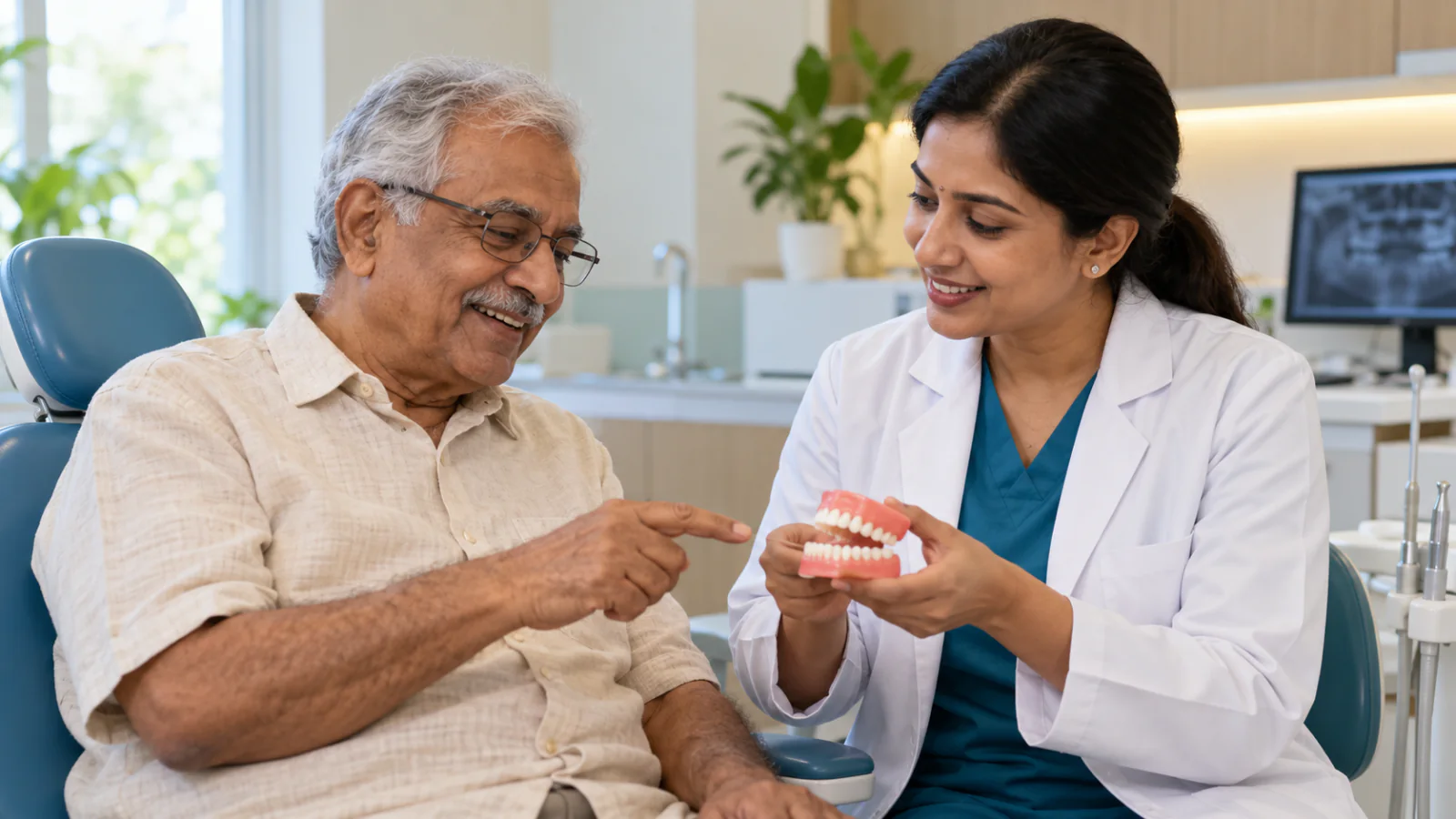
Full or partial dentures require regular maintenance. They should be cleaned daily, soaked overnight and examined by a dentist regularly. Even if you have no remaining natural teeth, the gums and underlying bone continue to change shape — a process called resorption — which affects how dentures fit. Poorly fitting dentures affect the ability to chew properly, which in turn affects nutrition. A relining or replacement may be needed every 5 to 7 years.
At Care & Cure Dental Centre, we provide dental care for all members of the family — including older adults. Whether you have natural teeth, partial dentures or complete dentures, our team will assess your oral health and give you clear guidance on maintaining it as you age. Book an appointment at our clinic in Keelkattalai, Chennai.